In short
- Every legal marriage in Ireland — civil, religious or secular — starts the same way: both of you give notice in person to an HSE registrar at least three months before the wedding (Civil Registration Act 2004, s. 46).
- At that appointment you bring photo ID, birth certificates, recent proof of address and your PPS numbers, name your solemniser, venue and witnesses, and pay a non-refundable €200 (HSE, October 2026).
- The registrar then issues the Marriage Registration Form, the “marriage licence”: your solemniser must see it before the ceremony, and it is valid for six months from your intended date (s. 48; HSE).
- Only a registered solemniser — an HSE registrar, a religious minister or a secular celebrant such as a humanist one — can marry you, in a place open to the public, before two witnesses aged 18 or over (s. 51).
- After a religious or secular ceremony, one of you takes the signed form to a civil registration service within a month; registering is free and a certificate costs €20 (HSE).
In this guide
- Step 1: book the notification appointment — early
- What to bring
- Can we marry with less than three months’ notice?
- What it costs
- The Marriage Registration Form
- Who can marry you
- Where you can marry: “a place that is open to the public”
- On the day: witnesses, words, age
- A Catholic, Church of Ireland or other church wedding
- Same-sex couples
- After the wedding
- Is there marriage leave?
- Where your photographer fits in
- Questions couples ask
- Sources
Getting married in Ireland is one process with three kinds of ceremony. Whoever marries you, the State’s side is the same: three months’ notice to a registrar, a form your solemniser must see, and that form back to a registrar afterwards. In 2025, 19,898 couples married here (CSO). This guide is for couples who live in Ireland; the sections cited are of the Civil Registration Act 2004 unless another law is named.
Step 1: book the notification appointment — early
The law asks you to notify a registrar at least three months before the wedding, both of you in person (s. 46). In practice that is a marriage notification appointment with the HSE Civil Registration Service, and the three months run from the day of the appointment, not the day you book it (HSE). Waiting times differ between offices and seasons, so book as early as you can: leave it late and you may not get an appointment three months before your date.
- How to book. Some services take bookings online; otherwise you phone. HSE Live (1800 700 700; Monday to Friday 8am–8pm, Saturday 9am–5pm) can tell you which, and civil ceremonies are booked the same way (HSE).
- Know your ceremony first. The registrar asks for the type of ceremony (civil, religious or secular), the venue’s name and address, your registered solemniser’s name, and the names and dates of birth of your two witnesses (HSE) — so book the solemniser and the venue, at least provisionally, before you go.
- Both of you sign a declaration that you know of no legal reason why you cannot marry (HSE; s. 46).
What to bring
| Document (original and a photocopy) | Who |
|---|---|
| Valid photo ID: a passport, an EU national identity card, or a refugee or asylum card — not a driving licence | Both of you |
| Birth certificate | Both of you |
| Proof of address dated within the last three months | Both of you |
| Your PPS number | Both of you |
| Divorce decree, or a certified copy, and any stay order on it | If divorced |
| The civil annulment court order, and a court letter confirming no appeal was lodged | If a marriage was annulled |
| Civil marriage certificate and your late spouse’s civil death certificate | If widowed |
| Civil partnership certificate, or the final decree of dissolution | If you are, or were, civil partners |
| Department of Justice letter on your immigration status, or your residence permit or stamp; a UK citizen, a passport | If not an Irish or EU citizen — you may also be interviewed |
Documents not in English or Irish need translations (HSE checklist, October 2026), and the registrar can ask for evidence of each of your names, addresses, civil status, ages and nationalities (s. 46(7)) — bring proof of anything unusual, such as a name that changed since birth.
Divorced outside Ireland? Still being married to someone else is an impediment (s. 2(2)), so a divorce from abroad must be one Irish law recognises. Outside the EU, that broadly means either spouse was domiciled — a legal test of your permanent home — in the country that granted it (Domicile and Recognition of Foreign Divorces Act 1986, s. 5); EU divorces follow EU rules. The Circuit Court or High Court can rule on it (Family Law Act 1995, s. 29). Ask a civil registration service for advice when you book, as the HSE suggests — not on the day.
Can we marry with less than three months’ notice?
Only with a court order, granted when it is “justified by serious reasons and is in their interests” (s. 47) — serious illness in the family is the court office’s example. Ask the HSE whether you need one, then apply together to the Circuit Court where either of you lives or works, or where you will marry, explaining why you couldn’t give notice. You both attend the hearing with photo ID; the order is often ready that day, and can take up to two weeks. With a certified copy you meet a registrar at least five days before the wedding (Courts Service, 2 April 2025).
What it costs
| Item | Cost (October 2026) | Source |
|---|---|---|
| Marriage notification — every marriage | €200, not refundable | HSE |
| Civil ceremony at a registrar’s office | No extra fee listed | HSE |
| Civil ceremony at a venue the HSE approves | An extra fee plus the registrar’s travel and subsistence; the HSE publishes no amount — ask | s. 52(2); HSE |
| New form after postponing beyond six months | No charge | HSE |
| Registering a religious or secular marriage | Free | HSE |
| Marriage certificate | €20, plus €3 postage within Ireland | HSE |
| Humanist celebrant | A guideline €450–€600, plus €90 to the Humanist Association; some add 23% VAT | Humanist Association of Ireland |
The Marriage Registration Form
- Your solemniser sees it first. The registrar completes the MRF, “the marriage licence”, and no marriage may be solemnised until one of you has given it to the solemniser to check (s. 48).
- Six months. It is valid for six months from your intended date. If the date moves within them, the office amends it; beyond them, contact it at least three months before the new date and meet a registrar again, at no charge (HSE).
- Signed on the day by the two of you, your two witnesses and the solemniser, straight after the ceremony (s. 49(1)).
Who can marry you
A marriage may be solemnised “by, and only by, a registered solemniser” (s. 51(1)), someone on the Register of Solemnisers kept by an tArd-Chláraitheoir, the Registrar General (s. 53). A ceremony led by anyone else, however moving, doesn’t marry you.
| Ceremony | Who marries you | Good to know |
|---|---|---|
| Civil | An HSE registrar, at a registrar’s office or a venue the HSE approves | Registrars usually marry only in the county where they are based (HSE) |
| Religious | A minister of a religious body on the register — a Catholic priest, a Church of Ireland rector, and many others | The church has its own preparation and paperwork (below) |
| Secular | A celebrant of a secular body on the register, such as the Humanist Association of Ireland | Humanist celebrants marry on any day, at any time (HAI) |
A secular body registers when its aims are secular, ethical and humanist, with at least 50 members and five years’ existence (s. 45A). For a minister who isn’t on the register — family clergy from abroad, say — their body can ask the Registrar General for a temporary authorisation (s. 57). Otherwise, marry with a registered solemniser and let whoever you like lead a second ceremony.
| Marriages in 2025 (CSO) | Opposite-sex couples | Same-sex couples |
|---|---|---|
| Civil | 6,304 (32.7%) | 338 (54.2%) |
| Roman Catholic | 5,927 (30.8%) | — |
| Humanist Association | 1,309 (6.8%) | 73 (11.7%) |
| Spiritualist Union of Ireland | 1,228 (6.4%) | 35 (5.6%) |
| Church of Ireland | 204 (1.1%) | — |
| Presbyterian | 41 (0.2%) | — |
| Other religious, Methodist included | 4,261 (22.1%) | 178 (28.5%) |
Where you can marry: “a place that is open to the public”
Whatever the ceremony, it must be in a place that is open to the public (s. 51(2)(c)), and since 2015 the Act says exactly what that is: “a building that is open to the public”, or “a courtyard, garden, yard, field or piece of ground that is open to the public and lying near to and usually enjoyed with” that building (s. 51(2A)). So:
- A venue’s garden or lawn can work, as ground that belongs with a building open to the public.
- A private house or garden can’t — unless a doctor certifies that one of you is too ill to attend a public place, and the Registrar General or a superintendent registrar approves another place (s. 51(2)(c)).
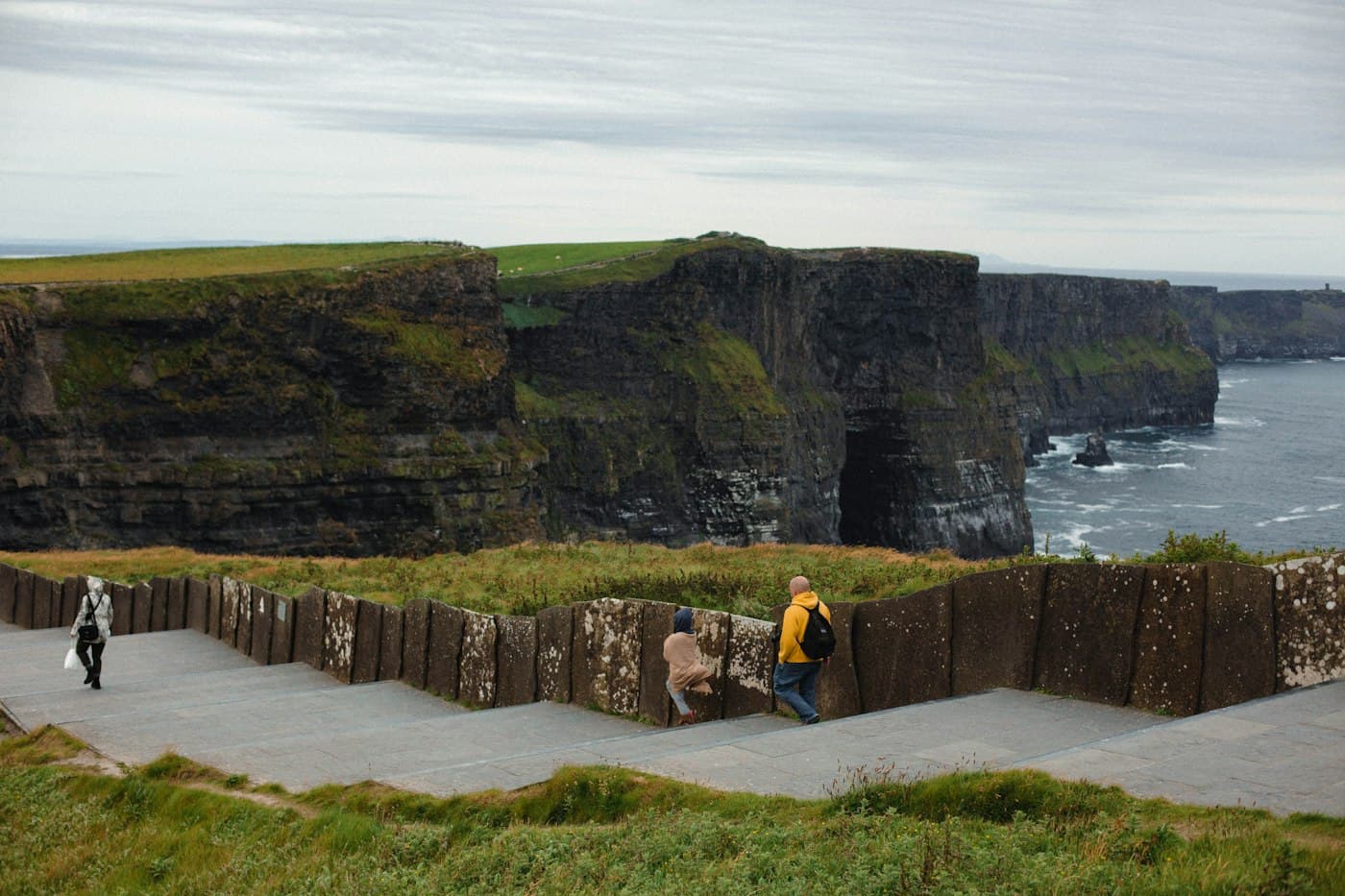
- A beach, a cliff path or a hilltop on its own is neither such a building nor its grounds. Ask your solemniser before you plan around one: the legal part can happen indoors and the rest outside.
- The time is yours to choose, with your solemniser’s agreement (s. 52(1)); the law sets no hours.
A civil ceremony outside the registry office needs the HSE to approve the place (s. 52(1)): dignified and suitable, with room for your guests; open to the public and clearly identifiable; free, unrestricted access; planning permission, fire and health and safety in order; public liability insurance; accessible to all; and no recent or current connection with any religion. The registrar may inspect it, there is an extra fee, and you needn’t live in the area (HSE). Planning a garden ceremony? Ask for the room it would move to in the rain to be approved too.
On the day: witnesses, words, age
- Two witnesses “professing to be 18 years or over”, and both of you, present together (s. 51(2)).
- Two declarations: that you know of no impediment, then that you accept each other as husband, wife or spouse; you are married once each of you has made them before the other, the solemniser and the witnesses (s. 51).
- 18 is the minimum age, with no exceptions: a marriage where either of you is under 18 is not valid (Family Law Act 1995, s. 31), and the court exemption was repealed from 1 January 2019 (Domestic Violence Act 2018, s. 45).
A Catholic, Church of Ireland or other church wedding
The priest or minister is your solemniser, so the civil side doesn’t change — notice three months ahead, the form to them before the day, the form back to a registrar within a month. The church’s own preparation runs alongside, and usually takes longer.
- Catholic: contact your local parish office and book the church and the priest or deacon. Your local priest or deacon completes a Pre-Nuptial Enquiry Form with each of you (the bishops’ revised form, since 27 November 2016); you bring a long-form baptismal certificate issued within six months of the wedding, proof of confirmation and evidence of freedom to marry — traditionally letters from parishes you lived in for six months or more since 18 (Accord).
- Marriage preparation: most dioceses require it. Accord’s programme — eight units, both of you, a certificate for your priest — is best booked 6–9 months ahead; it runs an inter-faith one too (Accord).
- Church of Ireland, Presbyterian, Methodist and others: speak to the rector or minister of the church; its preparation and paperwork are its own to set.
Same-sex couples
Same-sex couples have been able to marry since 16 November 2015, when the Marriage Act 2015 came into force (S.I. No. 504 of 2015); the Constitution says marriage may be contracted “by two persons without distinction as to their sex” (Article 41.4). The process is exactly the one above, and in 2025, 624 same-sex couples married (CSO). Civil partnerships can no longer be registered (Revenue); civil partners who want to marry each other contact a civil registration service and bring their partnership certificate (HSE).
After the wedding
- Register the marriage. After a civil ceremony, the registrar does it. After a religious or secular one, either of you takes the signed form to any civil registration service within one month, free — walk-in or by appointment, depending on the office (s. 49(2); HSE).
- Order your certificate: €20, online, by phone (about five working days) or at some offices in person (HSE).
- Your surname is your choice. Changing it is optional, and the marriage is registered under the names you had before (HSE). If you change it, the Department of Social Protection updates your PPS record and Revenue follows (Revenue); for a passport in the new name, go to the Passport Service — and book the honeymoon in the name on the passport you’ll travel with.
- Tell Revenue in myAccount (My Profile, then Manage My Record), with both PPS numbers and the date; both of you need to be registered for myAccount (Revenue).
Tax. In the year you marry you are taxed as two single people; if joint assessment would have cost less, claim the difference — from the date of the marriage, after 31 December, with an Income Tax Return and a year-of-marriage review through myEnquiries. From then on, joint assessment applies once Revenue knows: the assessable spouse is the higher earner unless you choose, and most credits and the standard rate band can be shared — not the Employee Tax Credit, the Earned Income Tax Credit or the rate-band increase for a second income. Separate assessment or separate treatment are the alternatives (Revenue).
- Your will. Marriage revokes a will made before it, unless made in contemplation of that marriage (Succession Act 1965, s. 85(1)); and a spouse has a legal right to half the estate if there are no children, a third if there are (s. 111).
- Your home. Neither of you can sell, mortgage or lease any interest in the family home without the other’s prior written consent, even if it is in one name only; otherwise the transaction is void (Family Home Protection Act 1976, ss. 1 and 3).
Is there marriage leave?
Not in law: the leave Irish employment law guarantees — annual, sick, maternity, paternity, parent’s, parental, adoptive, carer’s and force majeure leave among others — includes none for your own wedding (Workplace Relations Commission). Unless your contract gives more, the wedding and honeymoon come out of annual leave — at least four working weeks for anyone who works 1,365 hours in the year (Organisation of Working Time Act 1997, s. 19) — and your employer sets when, having consulted you at least a month before (s. 20). Ask early.
Where your photographer fits in
- Fridays in summer go first. In 2025 Friday was the most popular day (7,006 weddings), August the busiest month (2,568), and the busiest dates Friday 25 July and Friday 1 August (CSO). For a date like those, book the photographer when you book the notification appointment.
- Ask your solemniser what they allow during the ceremony — where the photographer may stand, whether flash is welcome — and pass on the exact time.
- The signing of the form, straight after the declarations, is a moment to have on camera.
- What to ask the photographer: how to choose a wedding photographer and the contract checklist.
Questions couples ask
How far in advance do you have to give notice to get married in Ireland?
At least three months, counted from the marriage notification appointment you both attend with an HSE registrar (Civil Registration Act 2004, s. 46; HSE). Waiting times vary, so book early; only a court can shorten the notice, for serious reasons.
How much does it cost to get married in Ireland?
The State’s part is the €200 notification fee every couple pays, not refundable (HSE, October 2026). A civil ceremony at a venue rather than a registrar’s office adds an HSE fee and the registrar’s travel. Registering a religious or secular marriage is free, and a marriage certificate costs €20.
What documents do you need to give notice of marriage in Ireland?
Each of you brings photo ID (a passport or an EU identity card), a birth certificate, proof of address from the last three months and your PPS number, with photocopies — plus a divorce decree, civil annulment order or late spouse’s death certificate if married before (HSE).
Can you get married outdoors in Ireland?
Yes, in the grounds of a building open to the public: the law allows a courtyard, garden, field or ground open to the public that lies next to and is usually enjoyed with it (Civil Registration Act 2004, s. 51(2A)). A private garden, or a beach with no such building, does not qualify.
Can a friend marry us in Ireland?
Not legally, unless they are on the Register of Solemnisers: HSE registrars and the solemnisers of registered religious and secular bodies. A registered body can also ask for a temporary authorisation for one of its members (ss. 51, 53 and 57). A friend can lead a ceremony alongside the legal one.
Do I have to change my surname when I get married in Ireland?
No, it is optional; your marriage is registered under the names you had before. If you change it, the Department of Social Protection updates your PPS record and Revenue follows.
With the appointment booked, the rest is the day itself: the wedding day timeline and how deposits and payment protection work. When you have your date, see the wedding photographers in Ireland or tell us about your day, and we’ll tell you who is free.
Sources
- HSE — How to get married in Ireland (read 24 October 2026) (opens in a new tab) · www2.hse.ie
- HSE — Marriage notification appointment checklist (opens in a new tab) · www2.hse.ie
- HSE — Book a marriage notification appointment or civil ceremony online (opens in a new tab) · www2.hse.ie
- HSE — Choosing a venue for a civil marriage ceremony (opens in a new tab) · www2.hse.ie
- HSE — Register a marriage (opens in a new tab) · www2.hse.ie
- HSE — Order a marriage certificate (opens in a new tab) · www2.hse.ie
- Law Reform Commission, Revised Acts — Civil Registration Act 2004, ss. 2, 45A, 46–53 and 57 (updated to 31 December 2025) (opens in a new tab) · revisedacts.lawreform.ie
- Law Reform Commission, Revised Acts — Civil Registration Act 2004, s. 51 (a place that is open to the public) (opens in a new tab) · revisedacts.lawreform.ie
- Law Reform Commission, Revised Acts — Family Law Act 1995, ss. 29, 31 and 33 (opens in a new tab) · revisedacts.lawreform.ie
- Law Reform Commission, Revised Acts — Domicile and Recognition of Foreign Divorces Act 1986, s. 5 (opens in a new tab) · revisedacts.lawreform.ie
- Law Reform Commission, Revised Acts — Succession Act 1965, ss. 85 and 111 (opens in a new tab) · revisedacts.lawreform.ie
- Law Reform Commission, Revised Acts — Family Home Protection Act 1976, ss. 1 and 3 (opens in a new tab) · revisedacts.lawreform.ie
- Law Reform Commission, Revised Acts — Organisation of Working Time Act 1997, ss. 19 and 20 (opens in a new tab) · revisedacts.lawreform.ie
- Courts Service — Marriage notification exemptions (published 2 April 2025) (opens in a new tab) · courts.ie
- Revenue — Marriage and civil partnerships (opens in a new tab) · revenue.ie
- Revenue — Taxation after the year of marriage or registration of civil partnership (opens in a new tab) · revenue.ie
- Revenue — Joint assessment (opens in a new tab) · revenue.ie
- Revenue — Changing your personal details (opens in a new tab) · revenue.ie
- Workplace Relations Commission — Leave (opens in a new tab) · workplacerelations.ie
- CSO — Marriages 2025: key findings (5 May 2026) (opens in a new tab) · cso.ie
- CSO — Marriages 2025: main results (opens in a new tab) · cso.ie
- Accord — Getting married in the Catholic Church (opens in a new tab) · accord.ie
- Accord — Marriage preparation FAQs (opens in a new tab) · accord.ie
- Irish Catholic Bishops’ Conference — Complementary norm with regard to canon 1067 (the Pre-Nuptial Enquiry Form, 27 November 2016) (opens in a new tab) · catholicbishops.ie
- Humanist Association of Ireland — Weddings (opens in a new tab) · humanism.ie